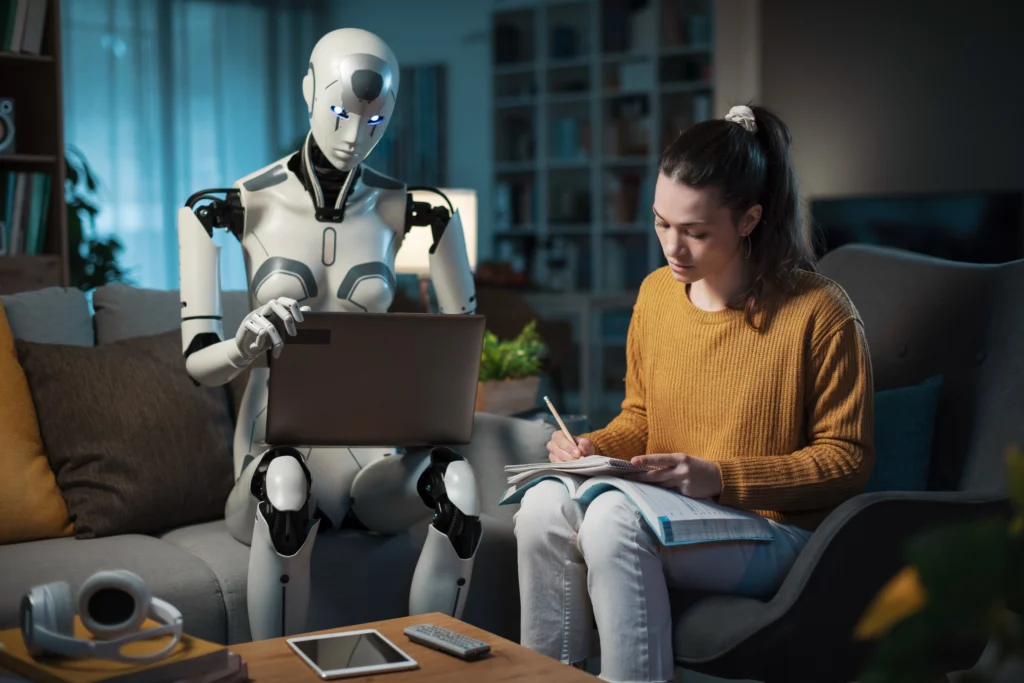
Artificial Intelligence is no longer something we talk about as the future. It is already part of our present. By 2026, AI and emerging technologies will reshape how industries function, how jobs evolve, and how careers are built. For students and parents making college decisions today, this shift brings both excitement and uncertainty.
At SchoolnBeyond, we hear this question often:
Will the choices we make today still make sense ten years from now?
The conversation has moved beyond which jobs AI might replace. What matters more is what skills students will need in an AI-driven world.
The Future of Work: Beyond the Headlines
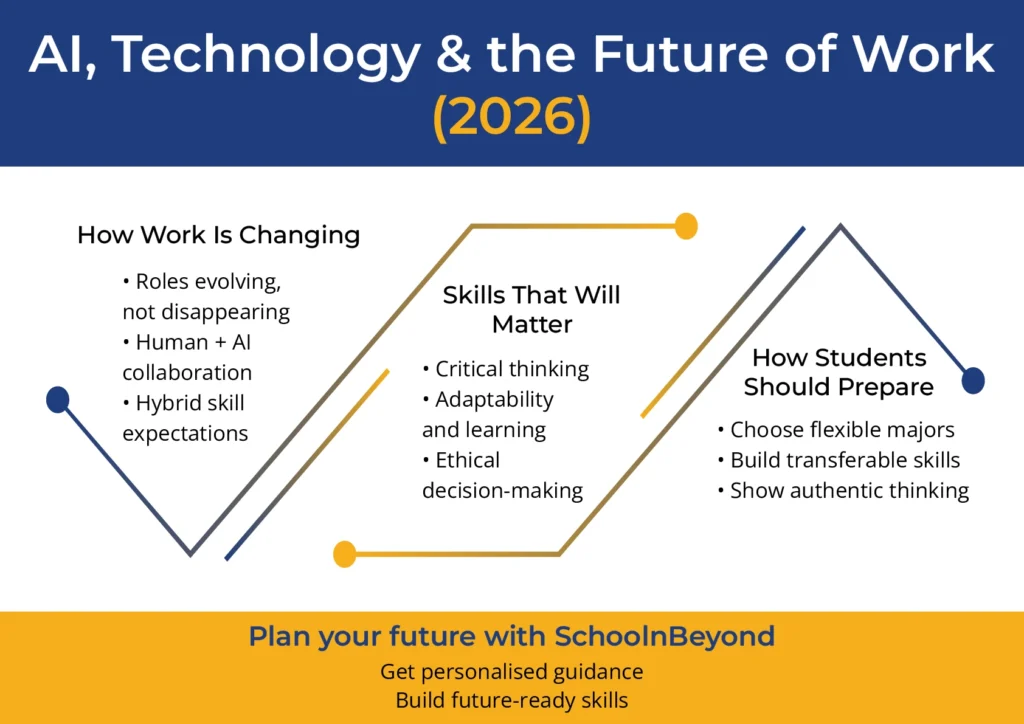
AI is often discussed in extremes—either as a threat to jobs or as a miracle solution. The reality is more balanced.
Automation is changing roles more than eliminating them. Work is becoming increasingly hybrid, collaborative, and interdisciplinary.
- Engineers are expected to communicate clearly, not just code.
- Business professionals must understand data and technology.
- Healthcare increasingly blends AI tools with human care.
- Creative fields are evolving through AI-assisted processes.
Students are no longer preparing for fixed job titles. They are preparing for careers that will evolve—sometimes more than once.
This is why university admissions teams are paying closer attention to how students think, learn, and adapt, not just what appears on a transcript.
Skills That Will Matter in 2026—and Beyond
As technology takes over routine tasks, human-centred skills become even more valuable. Universities and employers increasingly value:
- Critical thinking and problem-solving
- Ethical reasoning and decision-making
- Collaboration and communication
- Adaptability and lifelong learning
- Interdisciplinary understanding
These skills are not tied to one subject or one major. They are developed through how students learn, not simply what they study.
This is also why admissions committees look for depth, curiosity, and reflection—rather than rote performance alone.
Choosing a Major in an AI-Influenced World
Many parents worry that certain majors may soon become obsolete. In reality, most disciplines are evolving, not disappearing.
- Computer science now includes ethics and policy.
- Business education emphasises analytics and technology.
- Humanities strengthen communication, reasoning, and perspective.
- Life sciences increasingly integrate data and innovation.
The strongest candidates don’t chase “safe” majors. They pursue fields they understand deeply and can explain clearly—especially how those fields connect to the future of work.
AI and College Admissions: What Families Should Know
Universities are not anti-technology. But they are very clear about one thing: authenticity still matters. AI tools may help with brainstorming or organising ideas. What they cannot replace is a student’s personal voice, lived experience, and reflection—particularly in essays.
Admissions officers can usually sense when an application lacks genuine insight. Strong college applications come from honest storytelling, not perfectly written but impersonal content.
Preparing for Jobs That Don’t Exist Yet
Many of the jobs students will hold in the next decade do not exist today. Universities know this.
Preparing for the future isn’t about predicting job titles. It’s about building learning habits that last:
- Curiosity beyond the classroom
- Comfort with ambiguity
- Willingness to reskill
- Thoughtful and ethical decision-making
Students who demonstrate these qualities show long-term readiness—something admissions teams value deeply.
What Parents Should Focus on in 2026
For parents, the future of work can feel overwhelming. It’s natural to lean toward familiar paths. But today, stability doesn’t come from fixed choices—it comes from flexibility.
Future-ready students are those who:
- Understand their strengths
- Engage thoughtfully with technology
- Build transferable skills
- Are guided, not pressured
One-on-one college counseling helps families connect academic decisions with changing career realities—reducing anxiety and building confidence.
Conclusion: Learning How to Learn Matters Most
Artificial Intelligence will continue to transform the workplace. What it will not replace is curiosity, judgment, empathy, or creativity. Universities know this. Employers know this.
Students who learn how to adapt, reflect, and grow will be the ones who thrive.
At SchoolnBeyond, we support families in making academic decisions aligned with long-term opportunity, without chasing trends or reacting to fear.
Keep in touch on Instagram, LinkedIn, and Facebook to get further knowledge about education, careers and the future of work.